


Qr Code Tool - Manage and track marketing Campaigns
Summary (“The short version, for the busy ones.”)
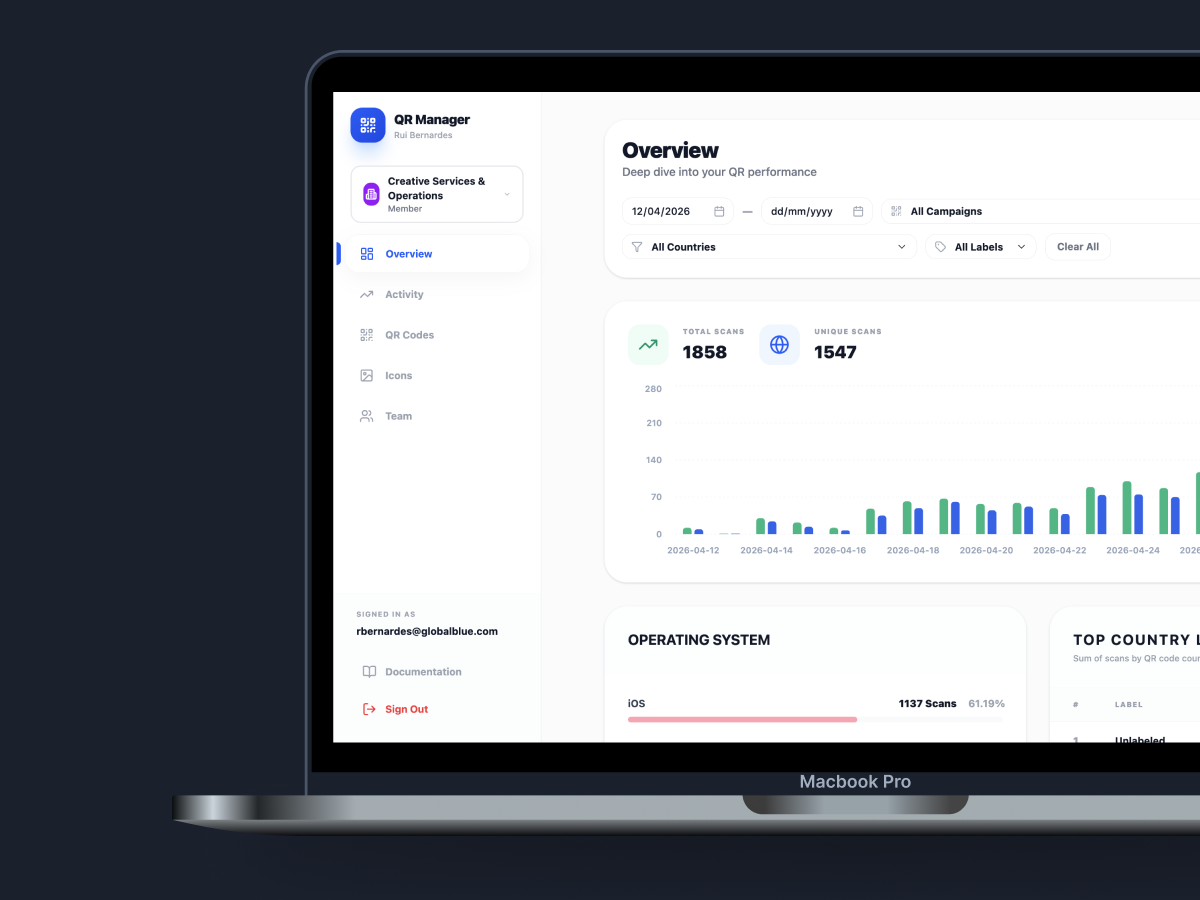
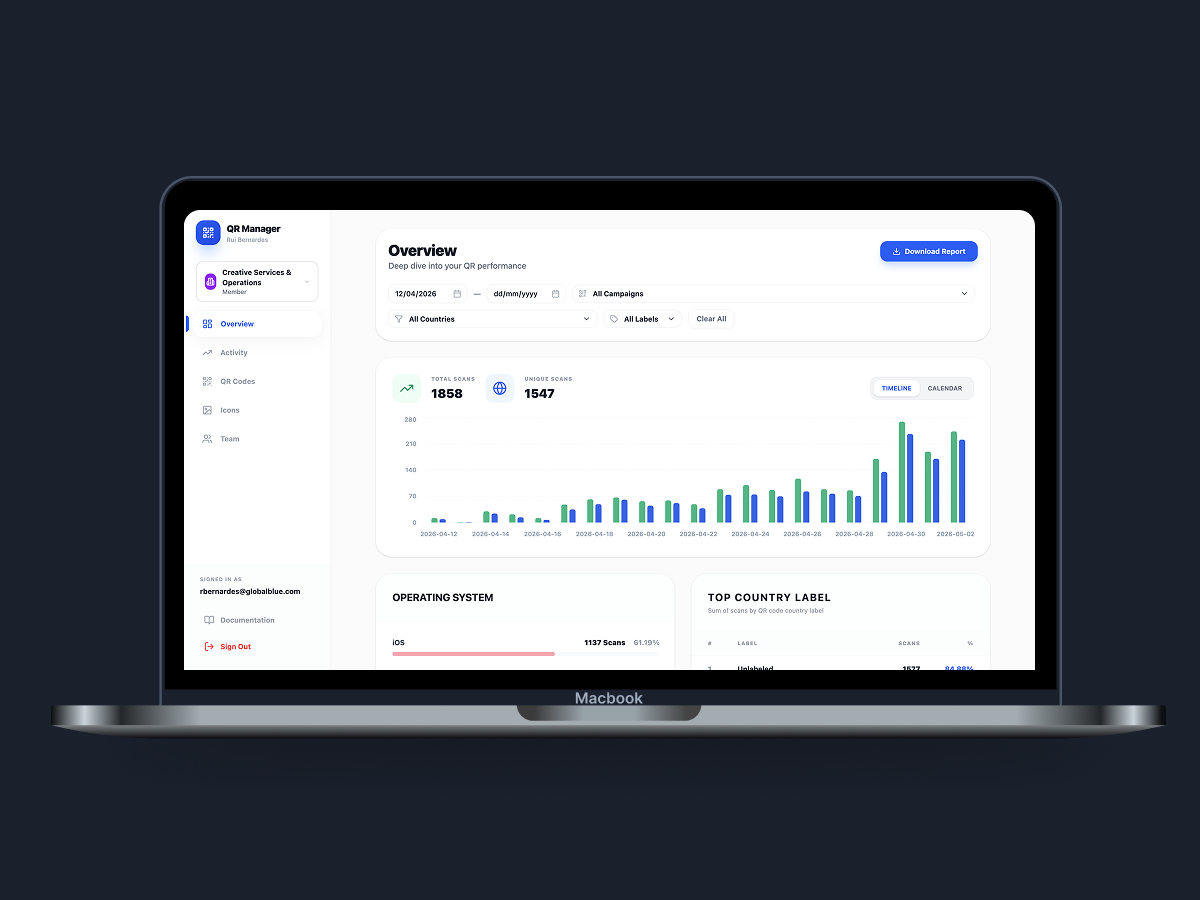
Global Blue was spending over €5,000 a year on an external platform to generate and track QR codes across its marketing campaigns, and even then, only a handful of people had access to it. Anyone else who needed a QR code had to submit a request and wait. I built an internal tool from scratch using Figma Make, Supabase, and vibe coding methodologies that replaced the external platform entirely. The new tool gives the whole team access to create branded QR codes, monitor performance, and manage campaigns independently, at an annual running cost of just $250. In its first 21 days live, the platform recorded over 1,800 scans across 40 QR codes, with usage still growing. Just in the first year, the tool is projected to support around 360 QR codes and between 38,000 and 45,000 scans, with no additional licensing costs as the team scales.
Frustation was setting up
During my collaboration with Global Blue, I noticed that several internal processes were being held back by the reliance on external platforms and third-party subscriptions. While these solutions seemed cost-effective at first, they often created limitations that ended up costing more in the long run, both financially and operationally.
One clear example emerged within the editorial and digital marketing team. Global Blue runs a high volume of printed and digital campaigns, many of which rely on QR codes as a connection point between physical and digital content. At the time, QR code generation depended entirely on an external platform, which needed to support branded QR code creation, performance tracking, multi-user collaboration, and secure access control.
The problem became critical when the team hit the production limits of the current subscription. Upgrading to unlock more capacity and allow additional team members to create and manage QR codes would cost over €5,000 per year. Beyond the cost, access was restricted to a small number of licensed users, meaning anyone who needed a QR code had to submit a request and wait, creating unnecessary delays and making the team dependent on specific individuals for a task that should have been simple and accessible to everyone.
Even with the high annual cost, the platform still had significant limitations around data visibility, asset ownership, and scalability, making it clear that this was not a sustainable long-term solution.
Democratizing QR Code Creation While Reducing Operational Costs
The main objective was to reduce the costs and friction associated with the existing QR code generation process, while making the tool accessible to everyone who needed it.
By building an internal solution, the project aimed to:
- Reduce annual subscription and licensing costs
- Allow more team members to independently create and manage QR codes
- Remove the dependency on specific individuals for simple requests
- Improve response times and team agility
- Scale without increasing costs
The goal was not just to replace an expensive external tool, but to create something more efficient and accessible that could grow alongside the team's needs.
Prototype- Solution Exploration
To explore a viable alternative to the existing third-party platform, I adopted a prototype-driven approach focused on rapid ideation, experimentation, and validation. Instead of following a traditional development cycle, the objective was to quickly transform an operational challenge into a tangible product concept that could be tested, iterated, and validated in real time.
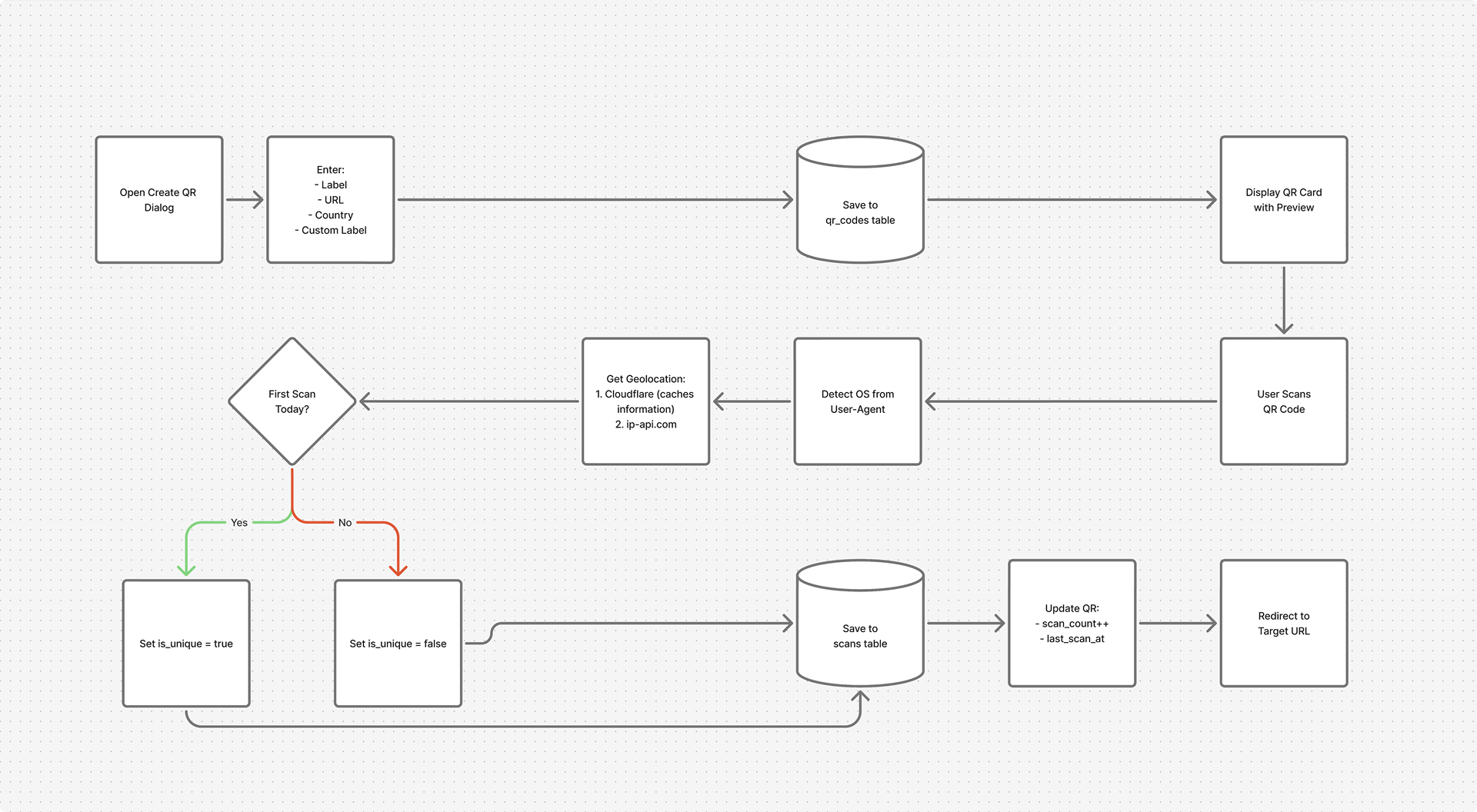
The first phase focused on defining the core user flows that would remove the operational bottlenecks identified during research. This included understanding how users would access the platform, interact with key features, and independently complete tasks that previously required intervention from a limited number of licensed users.
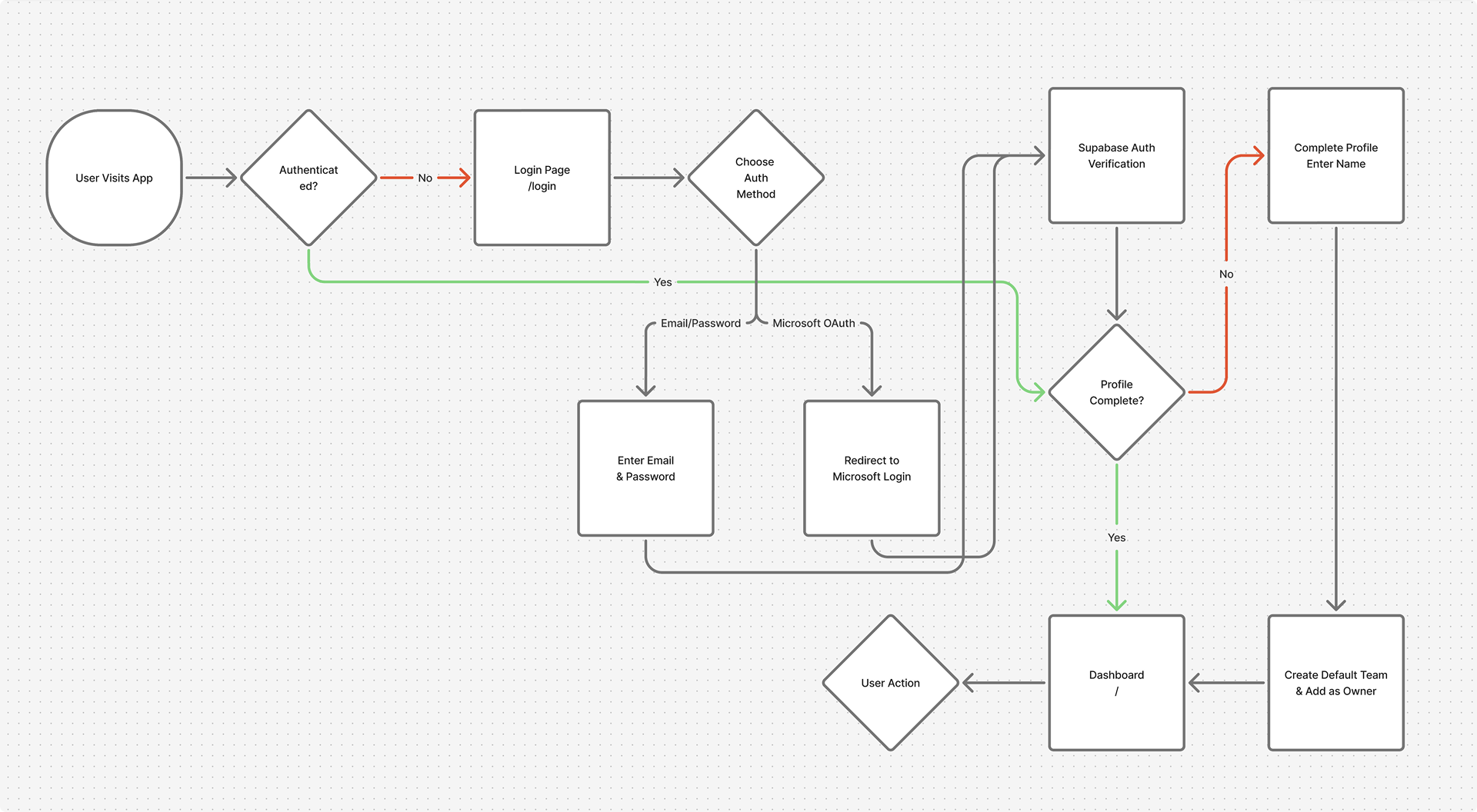
A second flow was designed around authentication and role-based permissions, ensuring that multiple contributors could securely access the platform while maintaining governance, accountability, and control over assets. This directly addressed one of the main friction points in the existing process: dependency on specific individuals to execute simple operational requests.
Once these foundational workflows were validated, I moved into rapid prototyping using Figma Make, AI-assisted workflows, and vibe coding methodologies, supported by Supabase as the backend infrastructure. This combination allowed early concepts to quickly evolve into a functional product prototype, connecting interface design, business logic, and real operational workflows in a single environment.
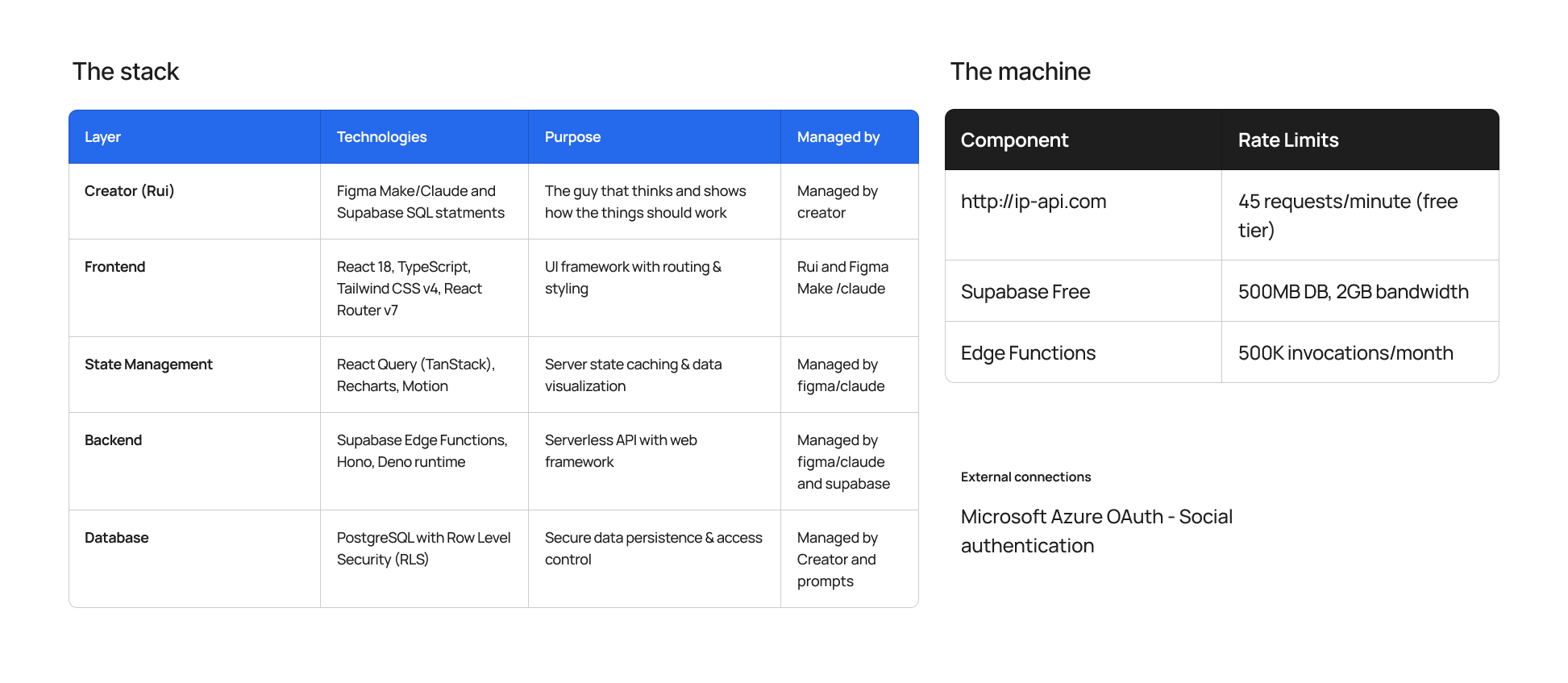
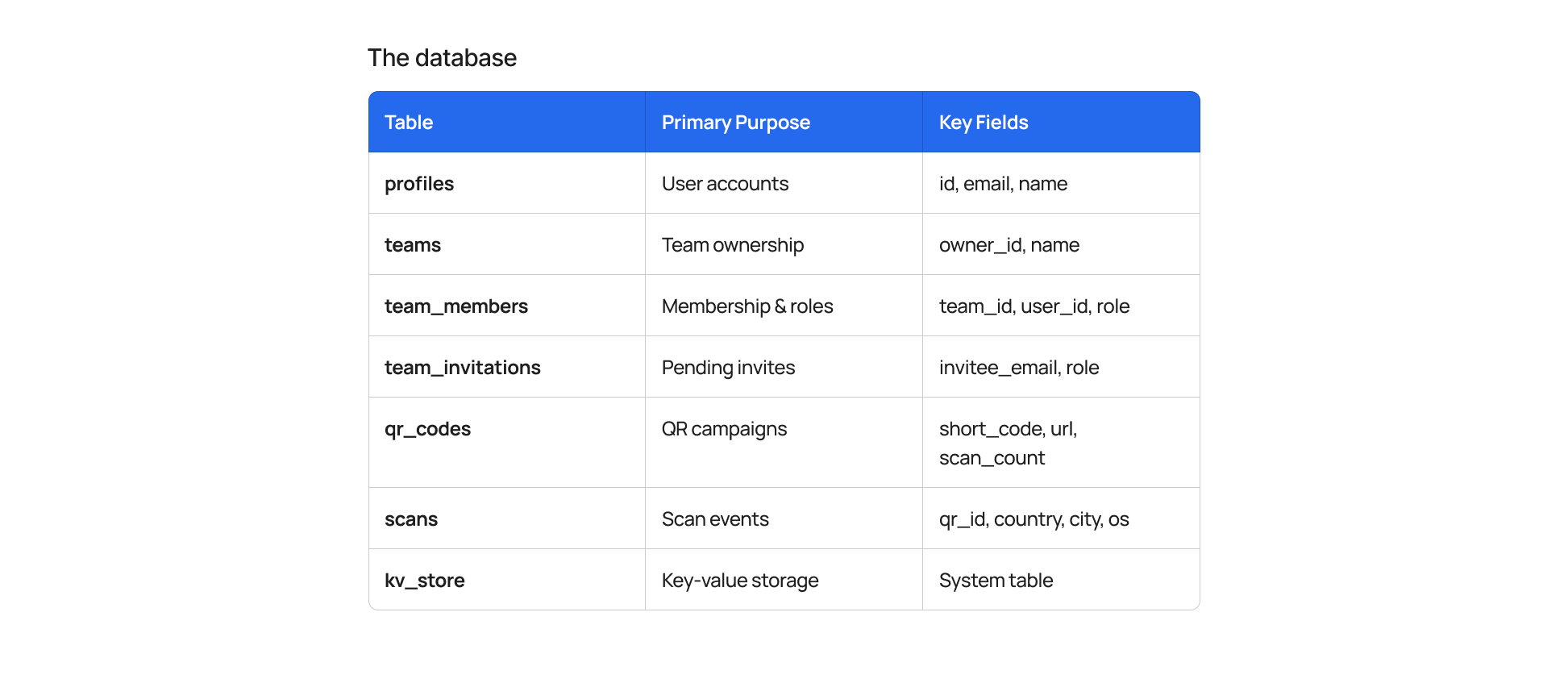
To support long-term scalability, a structured database architecture was then designed to manage the full lifecycle of each QR code. User profiles, campaign data, generated assets, analytics events, and access permissions were connected through a centralized data model, enabling the prototype to move beyond a static concept into a functional proof of concept capable of supporting real organizational needs.
Outcome, Impact & Future Vision
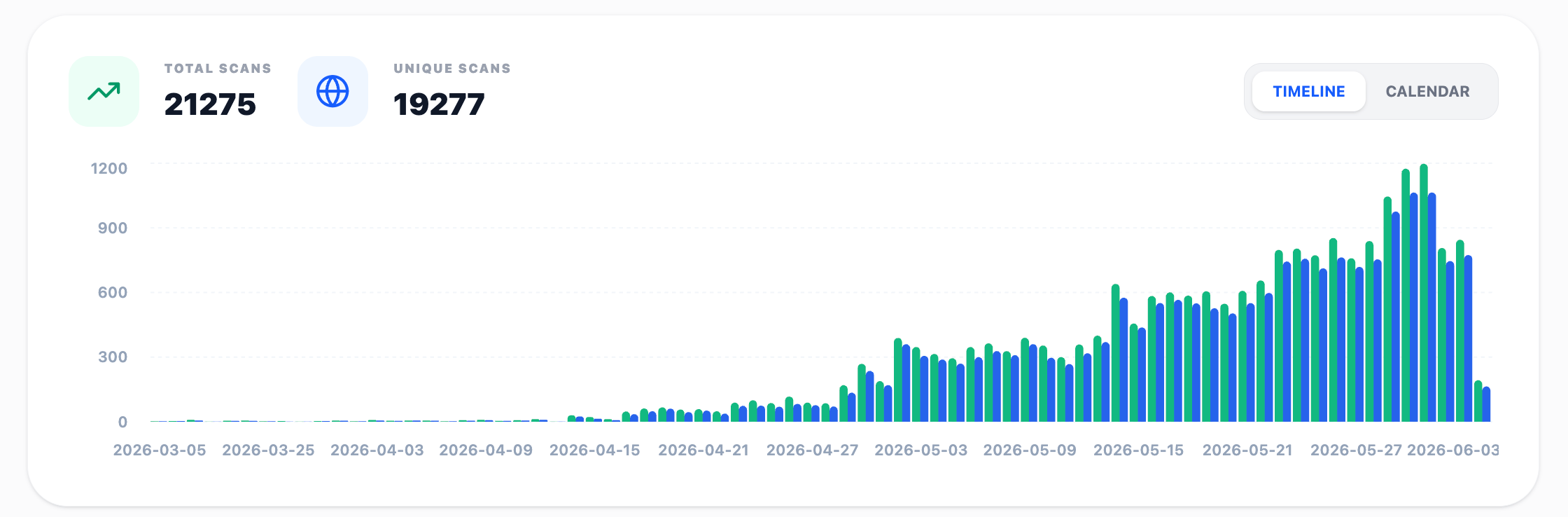
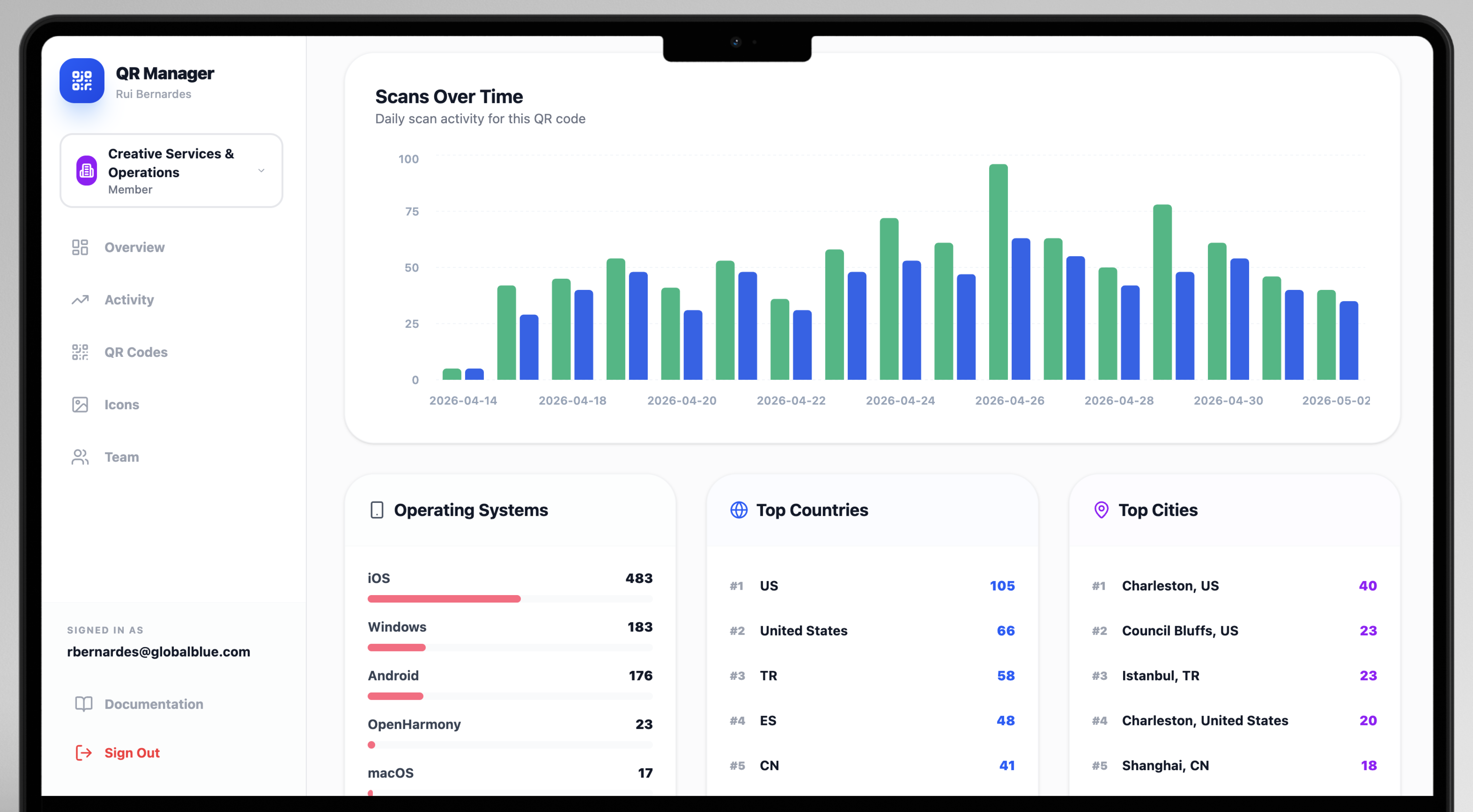
What began as a response to a costly operational bottleneck evolved into a fully functional internal product that is already demonstrating measurable, compounding impact. In its first 21 days of real-world deployment, the platform recorded 1,815 total scans and 1,509 unique scans across 40 active QR codes, with daily engagement growing from near zero to over 200 scans per day by the end of April, reflecting a platform still in acceleration rather than plateau. Projecting forward with a consistent monthly creation rate of approximately 40 new QR codes, and accounting for the cumulative scanning behaviour of previously deployed assets, the platform is expected to generate between 109,000 and 125,000 scans by end of year, across approximately 360 QR codes, all managed internally at an annual infrastructure cost of just $250, compared to the €5,000+ previously spent on an external subscription.
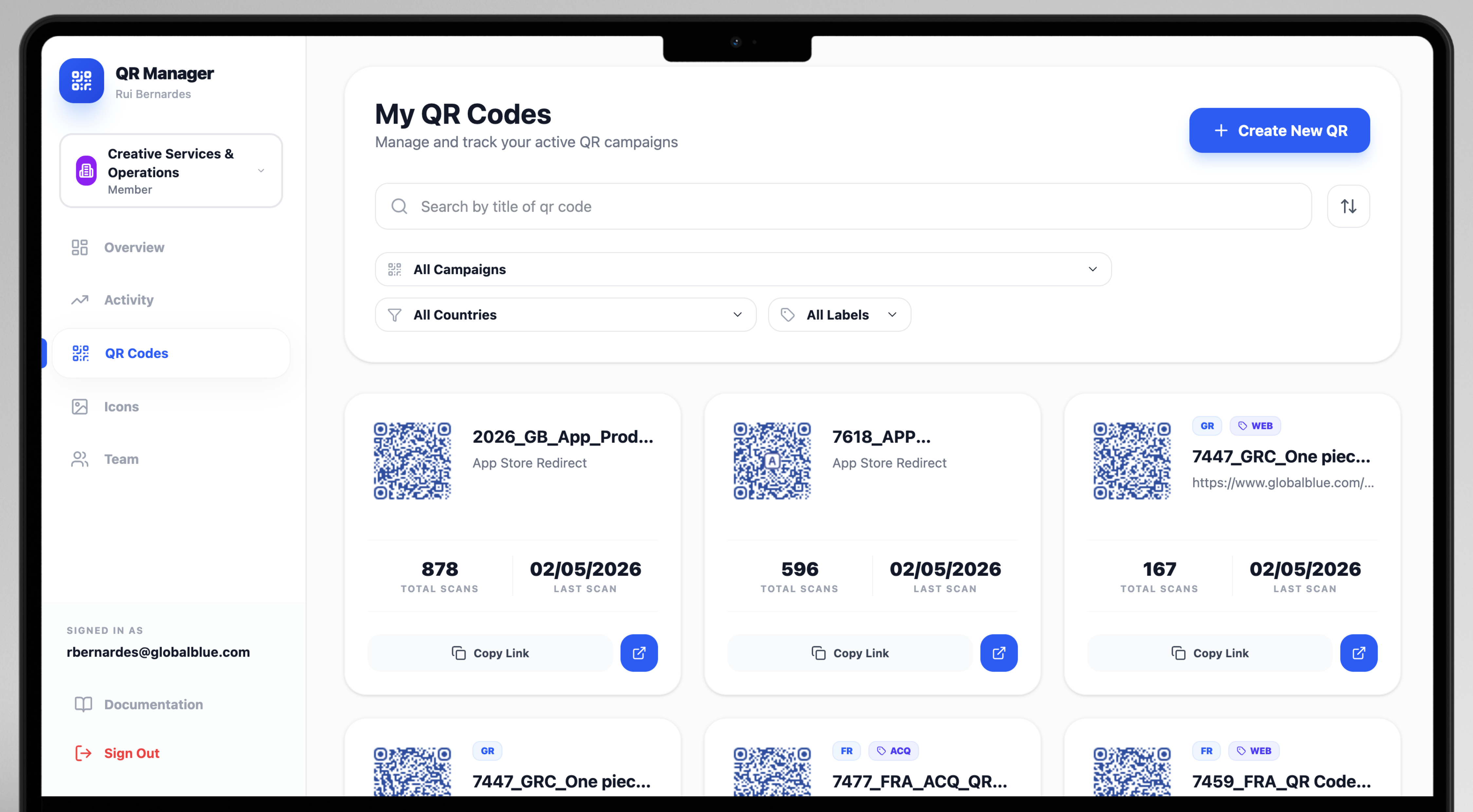
Beyond the numbers, a deliberate focus on UX and interface design ensured that the tool felt intuitive and frictionless from day one. Every touchpoint was designed with the end user in mind, and the management listing page makes creating, organizing, and updating assets feel effortless regardless of technical background, turning what was once a request-dependent process into something any team member can own independently and confidently.
At the individual asset level, each QR code has its own dedicated page where users can edit visual configurations, export the asset in the required format, and access granular analytics tied directly to that campaign, all within a single self-contained experience that removes the need for external tools or manual reporting.
Looking ahead, the foundation built through this prototype positions the platform for meaningful evolution. As adoption grows across teams, the next natural steps include more advanced analytics and campaign tagging, deeper branding customization, and potential integration with existing marketing and editorial workflows.
The architecture, built on Supabase with scalability at its core, is already prepared to support these additions without a proportional increase in cost or complexity. More importantly, the culture shift has already begun. Teams are no longer waiting on requests or worrying about licensing limits.
They have a tool that works for them, grows with them, and is entirely theirs.

Rui B
2026
Made in Porto

Handle with care

Qr Code Tool - Manage and track marketing Campaigns
Summary (“The short version, for the busy ones.”)
Global Blue was spending over €5,000 a year on an external platform to generate and track QR codes across its marketing campaigns, and even then, only a handful of people had access to it. Anyone else who needed a QR code had to submit a request and wait. I built an internal tool from scratch using Figma Make, Supabase, and vibe coding methodologies that replaced the external platform entirely. The new tool gives the whole team access to create branded QR codes, monitor performance, and manage campaigns independently, at an annual running cost of just $250. In its first 21 days live, the platform recorded over 1,800 scans across 40 QR codes, with usage still growing. Just in the first year, the tool is projected to support around 360 QR codes and between 38,000 and 45,000 scans, with no additional licensing costs as the team scales.
Frustation was setting up
During my collaboration with Global Blue, I noticed that several internal processes were being held back by the reliance on external platforms and third-party subscriptions. While these solutions seemed cost-effective at first, they often created limitations that ended up costing more in the long run, both financially and operationally.
One clear example emerged within the editorial and digital marketing team. Global Blue runs a high volume of printed and digital campaigns, many of which rely on QR codes as a connection point between physical and digital content. At the time, QR code generation depended entirely on an external platform, which needed to support branded QR code creation, performance tracking, multi-user collaboration, and secure access control.
The problem became critical when the team hit the production limits of the current subscription. Upgrading to unlock more capacity and allow additional team members to create and manage QR codes would cost over €5,000 per year. Beyond the cost, access was restricted to a small number of licensed users, meaning anyone who needed a QR code had to submit a request and wait, creating unnecessary delays and making the team dependent on specific individuals for a task that should have been simple and accessible to everyone.
Even with the high annual cost, the platform still had significant limitations around data visibility, asset ownership, and scalability, making it clear that this was not a sustainable long-term solution.
Democratizing QR Code Creation While Reducing Operational Costs
The main objective was to reduce the costs and friction associated with the existing QR code generation process, while making the tool accessible to everyone who needed it.
By building an internal solution, the project aimed to:
- Reduce annual subscription and licensing costs
- Allow more team members to independently create and manage QR codes
- Remove the dependency on specific individuals for simple requests
- Improve response times and team agility
- Scale without increasing costs
The goal was not just to replace an expensive external tool, but to create something more efficient and accessible that could grow alongside the team's needs.
Prototype- Solution Exploration
To explore a viable alternative to the existing third-party platform, I adopted a prototype-driven approach focused on rapid ideation, experimentation, and validation. Instead of following a traditional development cycle, the objective was to quickly transform an operational challenge into a tangible product concept that could be tested, iterated, and validated in real time.
The first phase focused on defining the core user flows that would remove the operational bottlenecks identified during research. This included understanding how users would access the platform, interact with key features, and independently complete tasks that previously required intervention from a limited number of licensed users.
A second flow was designed around authentication and role-based permissions, ensuring that multiple contributors could securely access the platform while maintaining governance, accountability, and control over assets. This directly addressed one of the main friction points in the existing process: dependency on specific individuals to execute simple operational requests.
Once these foundational workflows were validated, I moved into rapid prototyping using Figma Make, AI-assisted workflows, and vibe coding methodologies, supported by Supabase as the backend infrastructure. This combination allowed early concepts to quickly evolve into a functional product prototype, connecting interface design, business logic, and real operational workflows in a single environment.
To support long-term scalability, a structured database architecture was then designed to manage the full lifecycle of each QR code. User profiles, campaign data, generated assets, analytics events, and access permissions were connected through a centralized data model, enabling the prototype to move beyond a static concept into a functional proof of concept capable of supporting real organizational needs.
Outcome, Impact & Future Vision
What began as a response to a costly operational bottleneck evolved into a fully functional internal product that is already demonstrating measurable, compounding impact. In its first 21 days of real-world deployment, the platform recorded 1,815 total scans and 1,509 unique scans across 40 active QR codes, with daily engagement growing from near zero to over 200 scans per day by the end of April, reflecting a platform still in acceleration rather than plateau. Projecting forward with a consistent monthly creation rate of approximately 40 new QR codes, and accounting for the cumulative scanning behaviour of previously deployed assets, the platform is expected to generate between 109,000 and 125,000 scans by end of year, across approximately 360 QR codes, all managed internally at an annual infrastructure cost of just $250, compared to the €5,000+ previously spent on an external subscription.
Beyond the numbers, a deliberate focus on UX and interface design ensured that the tool felt intuitive and frictionless from day one. Every touchpoint was designed with the end user in mind, and the management listing page makes creating, organizing, and updating assets feel effortless regardless of technical background, turning what was once a request-dependent process into something any team member can own independently and confidently.
At the individual asset level, each QR code has its own dedicated page where users can edit visual configurations, export the asset in the required format, and access granular analytics tied directly to that campaign, all within a single self-contained experience that removes the need for external tools or manual reporting.
Looking ahead, the foundation built through this prototype positions the platform for meaningful evolution. As adoption grows across teams, the next natural steps include more advanced analytics and campaign tagging, deeper branding customization, and potential integration with existing marketing and editorial workflows.
The architecture, built on Supabase with scalability at its core, is already prepared to support these additions without a proportional increase in cost or complexity. More importantly, the culture shift has already begun. Teams are no longer waiting on requests or worrying about licensing limits.
They have a tool that works for them, grows with them, and is entirely theirs.
Rui B
2026
Made in Porto
Handle with care

Qr Code Tool - Manage and track marketing Campaigns
Summary (“The short version, for the busy ones.”)
Global Blue was spending over €5,000 a year on an external platform to generate and track QR codes across its marketing campaigns, and even then, only a handful of people had access to it. Anyone else who needed a QR code had to submit a request and wait. I built an internal tool from scratch using Figma Make, Supabase, and vibe coding methodologies that replaced the external platform entirely. The new tool gives the whole team access to create branded QR codes, monitor performance, and manage campaigns independently, at an annual running cost of just $250. In its first 21 days live, the platform recorded over 1,800 scans across 40 QR codes, with usage still growing. Just in the first year, the tool is projected to support around 360 QR codes and between 38,000 and 45,000 scans, with no additional licensing costs as the team scales.
Frustation was setting up
During my collaboration with Global Blue, I noticed that several internal processes were being held back by the reliance on external platforms and third-party subscriptions. While these solutions seemed cost-effective at first, they often created limitations that ended up costing more in the long run, both financially and operationally.
One clear example emerged within the editorial and digital marketing team. Global Blue runs a high volume of printed and digital campaigns, many of which rely on QR codes as a connection point between physical and digital content. At the time, QR code generation depended entirely on an external platform, which needed to support branded QR code creation, performance tracking, multi-user collaboration, and secure access control.
The problem became critical when the team hit the production limits of the current subscription. Upgrading to unlock more capacity and allow additional team members to create and manage QR codes would cost over €5,000 per year. Beyond the cost, access was restricted to a small number of licensed users, meaning anyone who needed a QR code had to submit a request and wait, creating unnecessary delays and making the team dependent on specific individuals for a task that should have been simple and accessible to everyone.
Even with the high annual cost, the platform still had significant limitations around data visibility, asset ownership, and scalability, making it clear that this was not a sustainable long-term solution.
Democratizing QR Code Creation While Reducing Operational Costs
The main objective was to reduce the costs and friction associated with the existing QR code generation process, while making the tool accessible to everyone who needed it.
By building an internal solution, the project aimed to:
- Reduce annual subscription and licensing costs
- Allow more team members to independently create and manage QR codes
- Remove the dependency on specific individuals for simple requests
- Improve response times and team agility
- Scale without increasing costs
The goal was not just to replace an expensive external tool, but to create something more efficient and accessible that could grow alongside the team's needs.
Prototype- Solution Exploration
To explore a viable alternative to the existing third-party platform, I adopted a prototype-driven approach focused on rapid ideation, experimentation, and validation. Instead of following a traditional development cycle, the objective was to quickly transform an operational challenge into a tangible product concept that could be tested, iterated, and validated in real time.
The first phase focused on defining the core user flows that would remove the operational bottlenecks identified during research. This included understanding how users would access the platform, interact with key features, and independently complete tasks that previously required intervention from a limited number of licensed users.
A second flow was designed around authentication and role-based permissions, ensuring that multiple contributors could securely access the platform while maintaining governance, accountability, and control over assets. This directly addressed one of the main friction points in the existing process: dependency on specific individuals to execute simple operational requests.
Once these foundational workflows were validated, I moved into rapid prototyping using Figma Make, AI-assisted workflows, and vibe coding methodologies, supported by Supabase as the backend infrastructure. This combination allowed early concepts to quickly evolve into a functional product prototype, connecting interface design, business logic, and real operational workflows in a single environment.
To support long-term scalability, a structured database architecture was then designed to manage the full lifecycle of each QR code. User profiles, campaign data, generated assets, analytics events, and access permissions were connected through a centralized data model, enabling the prototype to move beyond a static concept into a functional proof of concept capable of supporting real organizational needs.
Outcome, Impact & Future Vision
What began as a response to a costly operational bottleneck evolved into a fully functional internal product that is already demonstrating measurable, compounding impact. In its first 21 days of real-world deployment, the platform recorded 1,815 total scans and 1,509 unique scans across 40 active QR codes, with daily engagement growing from near zero to over 200 scans per day by the end of April, reflecting a platform still in acceleration rather than plateau. Projecting forward with a consistent monthly creation rate of approximately 40 new QR codes, and accounting for the cumulative scanning behaviour of previously deployed assets, the platform is expected to generate between 109,000 and 125,000 scans by end of year, across approximately 360 QR codes, all managed internally at an annual infrastructure cost of just $250, compared to the €5,000+ previously spent on an external subscription.
Beyond the numbers, a deliberate focus on UX and interface design ensured that the tool felt intuitive and frictionless from day one. Every touchpoint was designed with the end user in mind, and the management listing page makes creating, organizing, and updating assets feel effortless regardless of technical background, turning what was once a request-dependent process into something any team member can own independently and confidently.
At the individual asset level, each QR code has its own dedicated page where users can edit visual configurations, export the asset in the required format, and access granular analytics tied directly to that campaign, all within a single self-contained experience that removes the need for external tools or manual reporting.
Looking ahead, the foundation built through this prototype positions the platform for meaningful evolution. As adoption grows across teams, the next natural steps include more advanced analytics and campaign tagging, deeper branding customization, and potential integration with existing marketing and editorial workflows.
The architecture, built on Supabase with scalability at its core, is already prepared to support these additions without a proportional increase in cost or complexity. More importantly, the culture shift has already begun. Teams are no longer waiting on requests or worrying about licensing limits.
They have a tool that works for them, grows with them, and is entirely theirs.
Rui B
2026
Made in Porto
Handle with care